TireType.org featured on TrafficJAM Podcast – Watch the episode here:
TireType.org is an initiative to replace misleading tire category names with neutral numbered Types to add clarity to help consumers choose the right tires for their climate and regional road conditions.
Eliminate the terms “all-season” and “all-weather”. Read on below.
The Problem → The Solution → The Benefits
The Problem
“Several decades ago, some executives in the tire industry made a marketing decision that has perplexed drivers ever since: the term all season tire.” [15]
Current consumer-facing tire labels – All-Season and All-Weather – are confusing and, in some cases, dangerously misleading. Many drivers, especially new drivers, interpret “All-Season” and “All-Weather” as meaning the same thing and suitable for any climate in any region year-round when this is not the case.
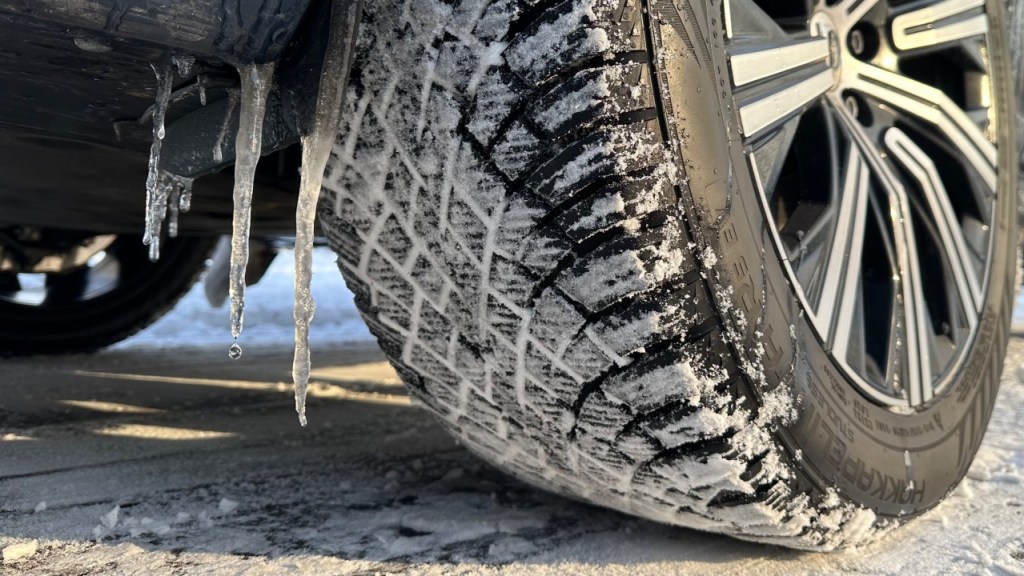
In reality, these categories differ substantially in rubber compound, tread design, temperature performance, cold-weather traction and safety outcomes (braking distance, steering control) – especially once ambient temperatures fall below roughly 7 °C (45 °F).
When consumers buy the wrong tire for their climate they face materially worse traction, longer stopping distances, and higher crash risk in snow and ice conditions. Evidence and industry guidance show winter-rated tires retain elasticity and traction below ~7 °C while all-season compounds (including those with m+s designations for mud and snow) begin to harden and lose grip. [1][2]
Further, Ontario Ministry of Transportation and Transport Canada’s endorsement of the Three-Peak Mountain Snowflake (3PMSF) symbol – created by the Tire and Rubber Association of Canada (TRAC) and the U.S. Tire Manufacturers Association: (USTMA) – as evidence that tires “have been designed specifically for use in severe snow conditions” is misguided and wrong as “the symbol does not account for ice, a serious winter condition that drivers in colder, Nordic Climates, Canada, the Northern U.S. and Central Europe are likely to encounter.” [1][3][6]
In reality, the Standard Test Method used to determine 3PMSF compliance, ASTM F1805-20, compares tires to a non-winter reference tire and measures only a tire’s acceleration traction on medium-packed snow compared to the reference non-winter tire. The most important performance features such as braking and turning on snow, along with ice traction are not components of the test. [4][5][6]
In other words, “All Winter tires have the Three-Peak Mountain Snowflake (3PMSF) symbol, but not all tires with the 3PMSF symbol are Winter tires.” [5]
In 2021, a new ISO Standard 19447 was developed to measure consumer tire ice grip performance – performance tests not included in the 3PMSF tests. Tires achieving or exceeding the ISO 19447 thresholds in the ice traction testing qualify to bear the Ice Grip Symbol. [6][7][8][9][10]
All of this amounts to massive confusion and ultimately presents a safety issue for Consumers choosing the wrong tires for their climate and regional road conditions.
The Solution
Rename the Tire Categories – eliminate the “all-season, all-weather” monikers.
- Type 1 Tire (former: summer tire): Relatively hard rubber compound tuned for warm pavement; optimized for maximum dry-road grip and cornering precision.
- Type 2 Tire (former: all-season tire): Rubber compound and tread balances tread life, fuel efficiency and acceptable wet/dry performance in above 7°C temperatures. Performs adequately in dry and wet conditions.
- Type 3 Tire (former: all-weather tire): Rubber compound and tread provides acceptable wet/dry performance in above 7°C temperatures. Performs adequately in occasional encounters with light snow or slush. 3PMSF compliant.
- Type 4 Tire (former: winter tire): 3PMSF and IceGrip compliant. Rubber compound much softer at low temperatures to preserve flexibility and traction below 7 °C. Sipes (tiny tread cuts) provide biting edges for snow and slush. Excellent braking, cornering and traction in cold, snowy and icy conditions.
- Type 5 Tire (former: studded winter tire): Type 4 Tire construction but with tungsten carbide studs in the tread to mechanically bite into ice for ultimate braking, cornering and traction in cold, snowy and icy conditions.
Who Benefits?
Consumers benefit.
- Clarity reduces wrong purchases. Removing marketing terms that imply universality and replacing them with clear, unambiguous data based neutral, numbered types will encourage consumers to research and educate themselves to reduce mistaken purchases.
- Better match of tire to climate and regional road conditions lowers crash risk. Independent tests and government guidance show winter-rated tires materially shorten stopping distances and improve control under cold/snow/ice conditions compared with all-season.
Tire Dealers benefit.
- Clear, neutral data-based labelling means Tire Dealers no longer need to spend the first 5 minutes of each customer interaction clearing up the “all season – all-weather” confusion. Clear, neutral types allow Tire Dealers to educate consumers based on local climate and regional road conditions – free from ambiguous and confusing marketing terms.
This change empowers Consumers and Tire Dealers.
Subscribe to stay updated on the TireType.org initiative. Note, your email subscription requires confirmation, check your inbox after subscribing.
Reference links:
- [1] Government of Canada Using winter tires https://tc.canada.ca/en/road-transportation/stay-safe-when-driving/winter-driving/using-winter-tires
- [2] What’s the Difference? All Weather vs All Season vs Winter Tires https://www.kaltire.com/en/whats-the-difference-between-all-season-all-weather-and-winter-tires.html
- [3] Ontario Ministry of Transportation Winter driving https://www.ontario.ca/page/winter-driving
- [4] ASTM Standard Test Method for Single Wheel Driving Traction in a Straight Line on Snow- and Ice-Covered Surfaces https://store.astm.org/f1805-20.html
- [5] What is the Three-Peak Mountain Snowflake Symbol? https://www.tirerack.com/upgrade-garage/what-is-the-threepeak-mountain-snowflake-symbol
- [6] What is the Ice Grip Symbol? https://www.tirerack.com/upgrade-garage/what-is-the-ice-grip-symbol
- [7] ISO 19447:2021 Passenger car tyres — Method for measuring ice grip performance https://www.iso.org/standard/73917.html
- [8] What You Need to Know About the Ice Grip Symbol https://na.nokiantyres.com/tips/blogs/winter-tire-certification-ice-grip/
- [9] ASTM F2493 Standard Specification for P225/60R16 97S Radial Standard Reference Test Tire https://store.astm.org/f2493-20.html
- [10] Ice grip symbol: A new standard of winter tire https://www.kaltire.com/en/ice-grip-symbol.html
- [11] Government of Quebec Requirements for winter tires https://www.quebec.ca/en/transports/traffic-road-safety/winter-road-safety/requirements-for-winter-tires
- [12] Studded tires vs non studded winter tires https://www.kaltire.com/en/are-studded-tires-right-for-you.html
- [13] Understanding Studded Tires: A Comprehensive Q&A Guide for Canadian Drivers https://pmctire.com/tech/understanding-studded-tires-a-comprehensive-qa-guide-for-canadian-drivers-pid-33
- [14] Studded Winter Tires or Non-Studded Winter Tires? https://na.nokiantyres.com/innovation/safety/studded-or-non-studded-tires/
- [15] What’s the difference between all season and all weather tires? https://na.nokiantyres.com/tips/choosing-your-tires/difference-between-all-season-tires-and-all-weather-tires/
 TireType.org